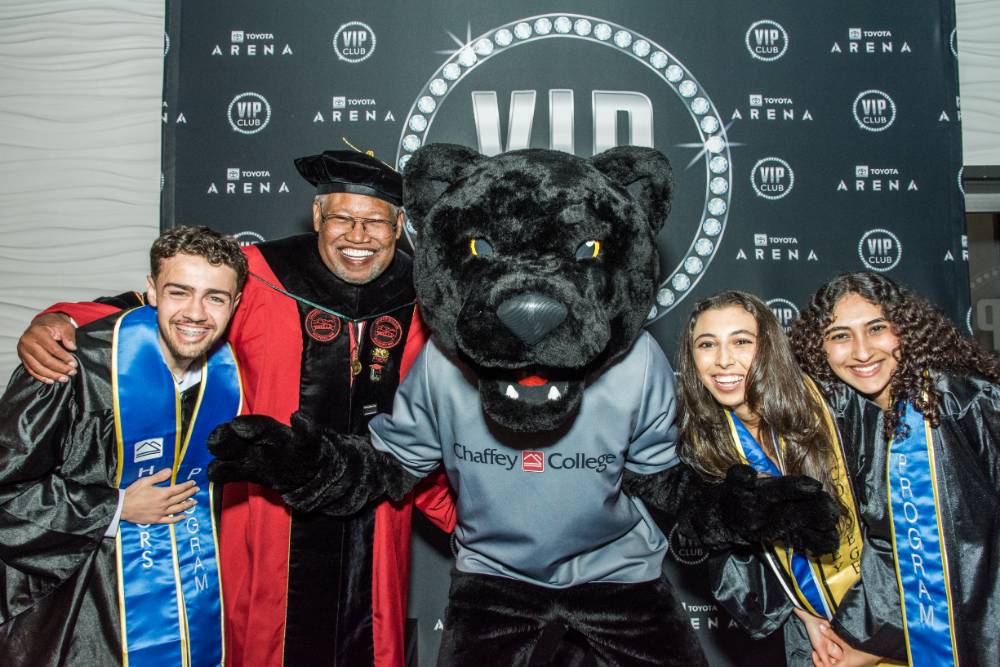
Superintendent/President Henry D. Shannon Leaves Chaffey With a Legacy of Transformation
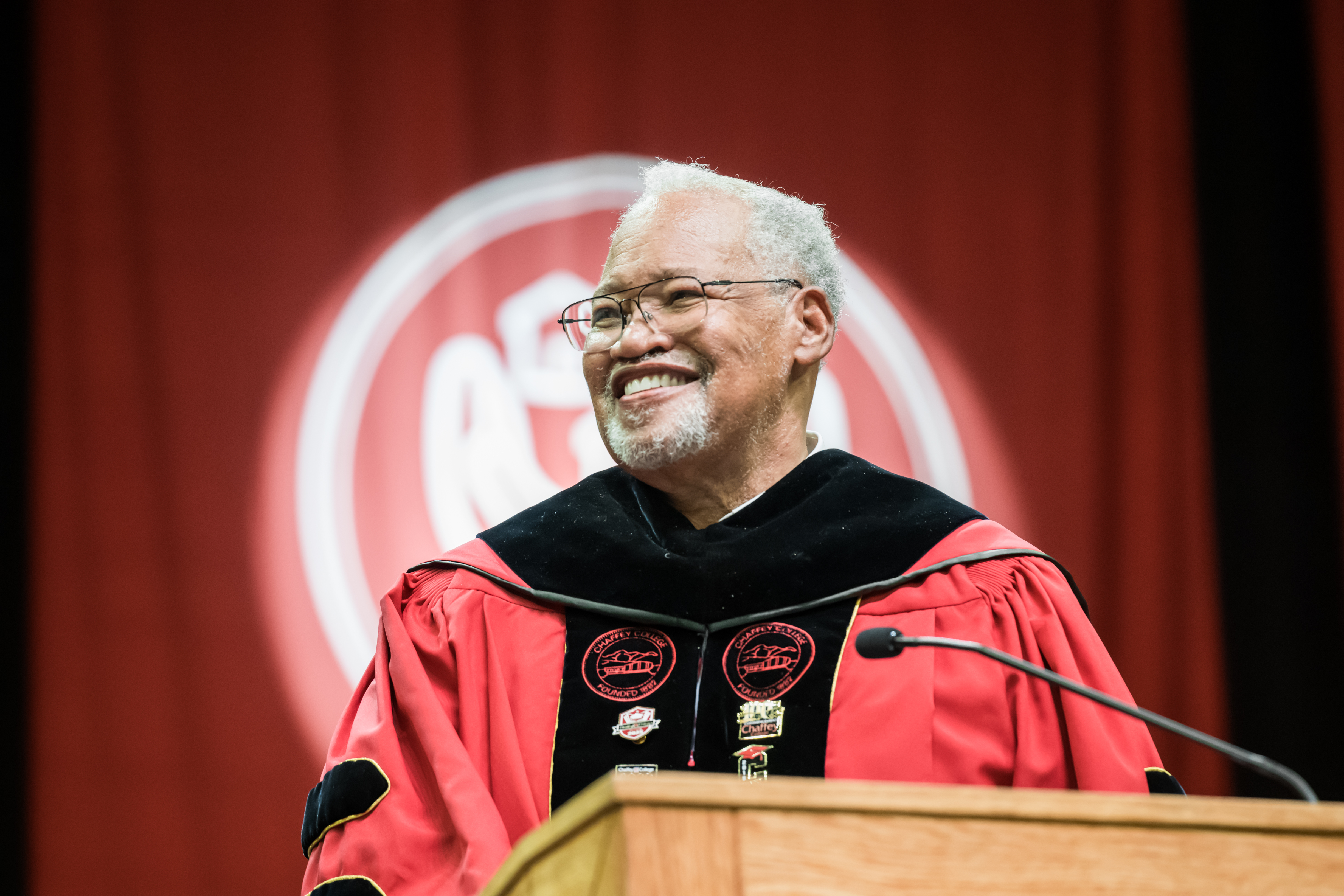
The baseball caps, portraits of Black leaders, photos of grandchildren and awards from a distinguished career will soon be tucked into boxes from the office of Superintendent/President Henry D. Shannon. And when Shannon turns off the lights in his office for the last time in December, he will not be thinking of vacations or a well-earned rest.
Shannon says his mind will be filled with the tasks he had hoped to complete.
“It’s bittersweet,” he said. “You always want more time to do more.”
That drive to make Chaffey College the “jewel of the Inland Empire” — his signature catchphrase — kept him on the books long past the time when many professionals choose to retire. At 80-years-old, he says he stayed because he always felt like he had more work to do.
Shannon leaves behind a legacy of transformation — with tens of thousands of educators and students touched by his leadership in a career that has spanned more than five decades.
Shannon grew up in Clarksdale, Miss. in the height of Jim Crow segregation. His grandmother, Artelia Shannon, raised him until he was 8-years-old and planted the seed that led him to pursue a career in education.
“My grandmother called me her professor. I didn’t know what a professor was at the time, but I think she was preparing me to be in education then,” he said.
He eventually joined his mother in Missouri, going to grade school in St. Louis. Like the plot of a romantic movie, Shannon and his future wife, Gwen Thompson, met on the basketball court — Shannon as captain of the basketball team and his wife as cheerleading captain.
The couple married several years later and became teachers.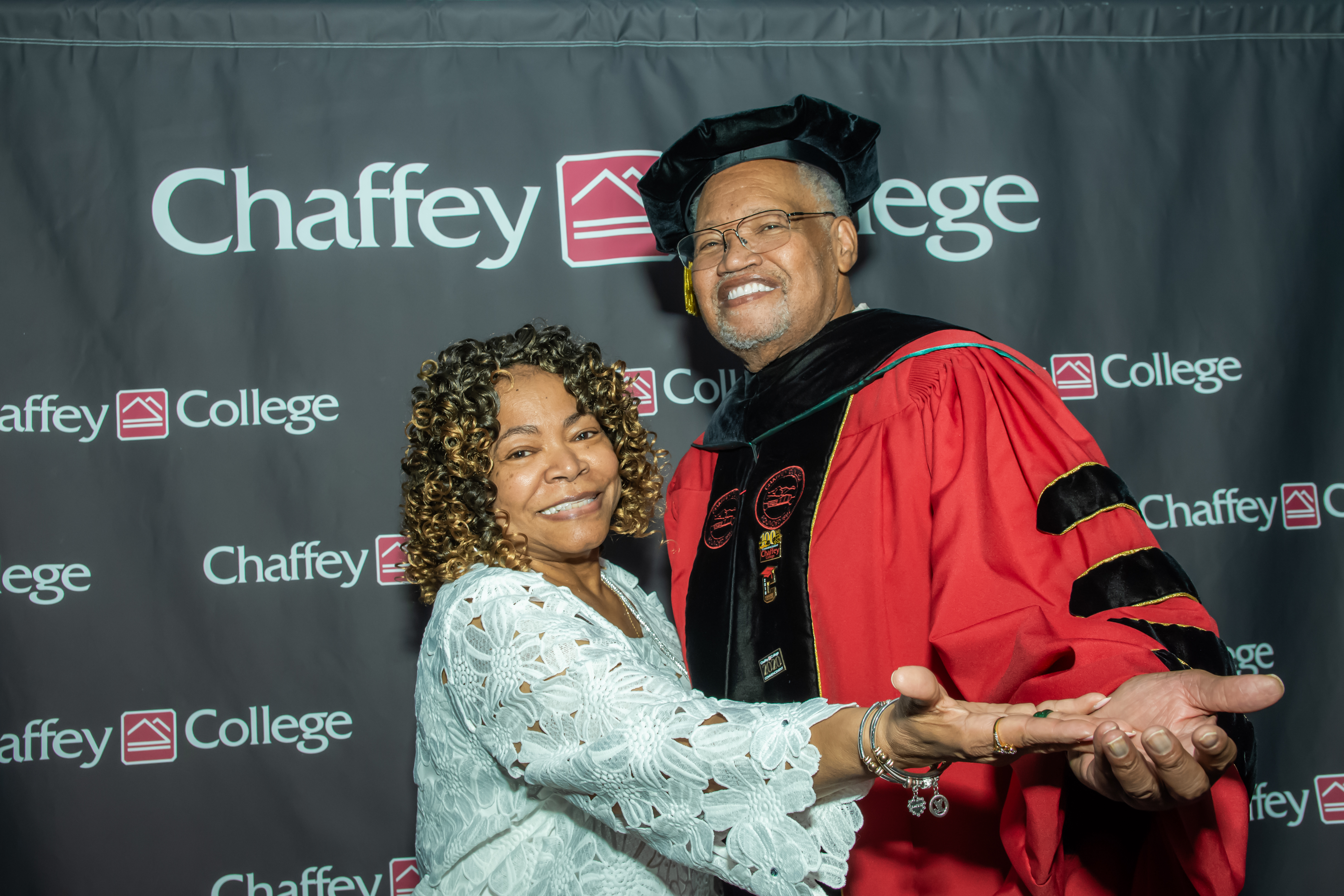
Shannon pursued an undergraduate degree in education from Harris-Stowe State University and counseling master’s and doctorate degrees from Washington University in St. Louis. He began his career as a junior high school history teacher in St. Louis, quickly moving his way up the ranks as counselor, college professor and into higher education administration.
His mentors included his high school counselor Ruth Pippens, later a dean of instruction at Harris-Stowe, Dr. William Pearson, former Harris Teachers College dean of instruction, and former Harris Teachers College President Dr. Richard Stumpe – each giving him the support and motivation to aim high in his career. Shannon also credits his cousin, Dr. Horace Mitchell, with being his rock. Mitchell is a retired president for California State University Bakersfield.
"He is a person of vision and he always has ideas of what he can do to make a difference," Mitchell said. "I'm very, very proud of him for that."
Ed “Elroy” Yancey met Shannon as a 16-year-old Upward Bound student. Shannon, who directed the program for St. Louis University, was the first Black man with a doctorate degree that Yancey had met. That made such an impression that Yancey set out to get his own Ph.D. and become a professor.
The South Carolina resident now serves as assistant professor at Allen University and an adjunct professor for Morehouse College – both historically Black colleges.
“I am what I am because of him,” he said. “He’s been my mentor my entire life since I was 16 years old. As a direct result of Dr. Shannon’s influence, I have dedicated my life to working with Black males, from those in prison to college students.”
In 1983, Shannon came to St. Louis Community College as dean of student development services and became chancellor in 2000, becoming the first Black man in college’s history to take on that role.
Michael K. Holmes, who Shannon hired to start the William Harrison Center at St. Louis Community College, says that he has maintained contact with his mentor for the last 20 years. Holmes now serves as a regional executive vice president for the Urban League of Metropolitan Saint Louis.
"I am grateful for Dr. Shannon's mentorship and support throughout my career journey. He consistently believed in me, offered wisdom when I needed direction, and inspired me to pursue opportunities that aligned with my goals and passions. His influence has had a lasting impact on my life and career,” he said.
Shannon's work with the Accrediting Commission for Community and Junior Colleges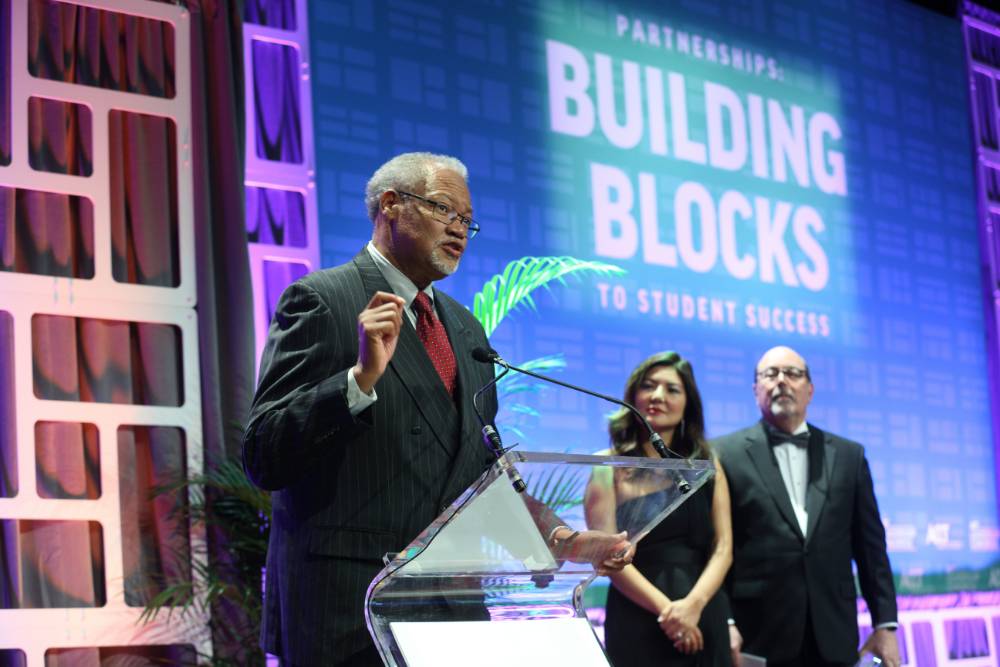 captured the attention of several colleges in other states, and in 2007 he was approached
for superintendent roles in Maryland, Texas and California.
captured the attention of several colleges in other states, and in 2007 he was approached
for superintendent roles in Maryland, Texas and California.
Shannon chose Chaffey, becoming only the second Black president in college history after Sam Ferguson, who served in the early 1980s.
Governing Board Vice President Lee C. McDougal, who was on the board when Shannon was hired, remembers the moment when Shannon walked out of the room following his interview. He looked at his fellow board members and said, “This is our guy.”
“I quickly recognized that he was exceptionally well suited to serve as superintendent/president of Chaffey College,” McDougal said. “His calm, thoughtful presence helped create a welcoming environment for everyone he encountered.”
When he began at Chaffey, Shannon saw potential, but knew he had a lot of work to do because of the college’s aging facilities. He had the resources to achieve his goals with Measure L — a $230 million general obligation bond passed by taxpayers in 2002.
A year after he was hired, the college opened its Chino campus, the first of numerous projects aimed at expanding the college, repairing infrastructure and renovating facilities.
By improving Chaffey’s facilities, Shannon knew the college would be able to attract quality faculty, staff and managers. He modeled his leadership approach after the late Dr. Vernon Crawley, who worked with Shannon as president at St. Louis Community College at Forest Park.
“He believed in patience, humility and strategic planning,” Shannon said. “He was good with people.”
Shannon describes his leadership style as transformational, helping good employees become great.
“What it takes is believing in them, supporting them and then getting out of their way,” he said.
The greatest challenge of his career came in 2020 during the pandemic, which changed the entire landscape of education.
Chaffey pivoted to online instruction and gave students added support with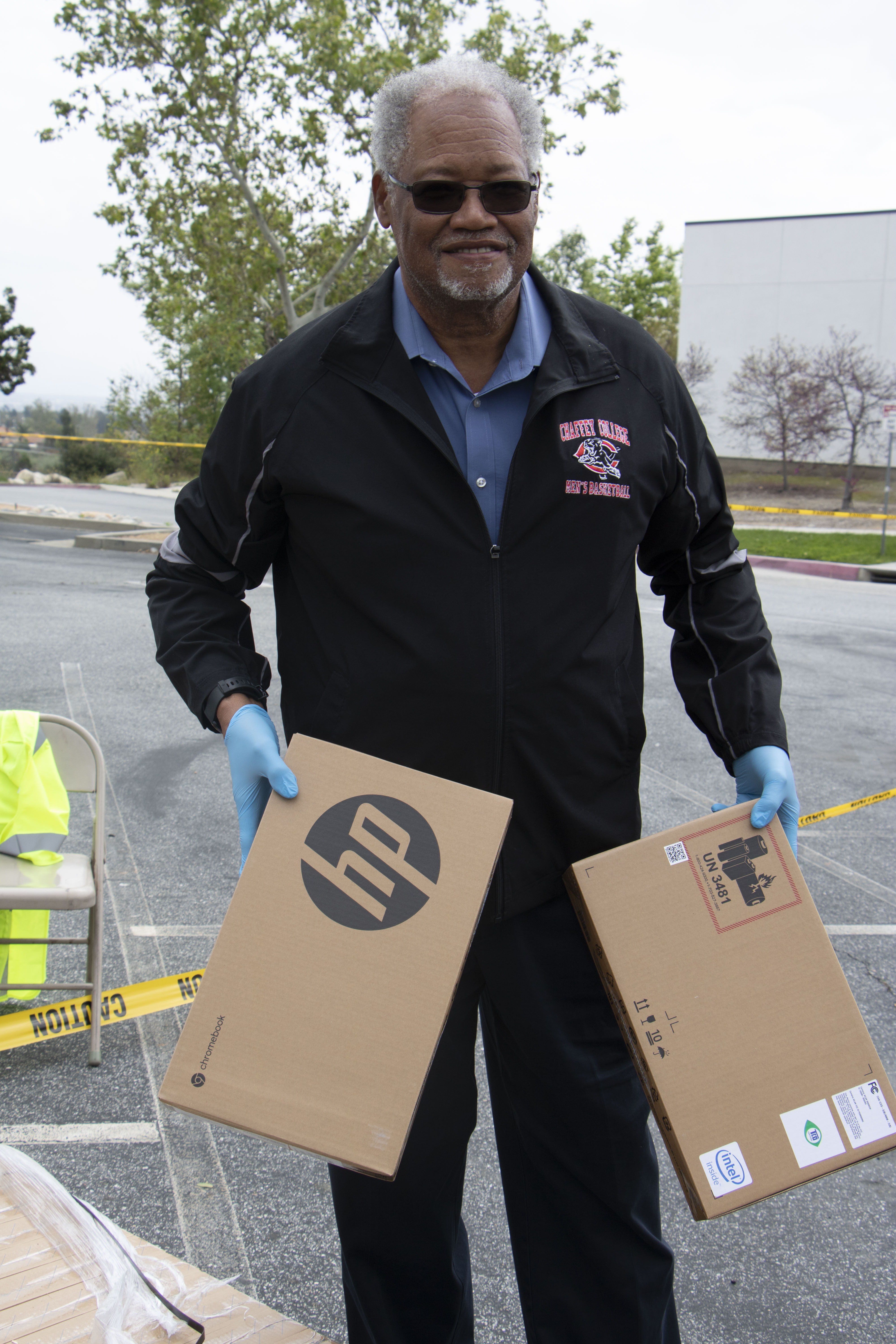 emergency funding, groceries, mental health and technology. Shannon worked alongside
faculty and staff, handing out Chromebooks to students in parking lot events at the
Rancho Cucamonga campus. At a time when students across the nation were dropping out
of school to pay bills, Shannon worked with executive leaders, faculty and staff to
find ways to keep students enrolled. And he stayed focused despite COVID’s devastating
effects on his own family – the disease took the life of two of his aunts and hospitalized
his mother.
emergency funding, groceries, mental health and technology. Shannon worked alongside
faculty and staff, handing out Chromebooks to students in parking lot events at the
Rancho Cucamonga campus. At a time when students across the nation were dropping out
of school to pay bills, Shannon worked with executive leaders, faculty and staff to
find ways to keep students enrolled. And he stayed focused despite COVID’s devastating
effects on his own family – the disease took the life of two of his aunts and hospitalized
his mother.
The college now provides a much larger percentage of online offerings – something few believed possible prior to 2020.
“The pandemic showed us it can be done,” he said.
One of his proudest moments came in 2017 when Chaffey was named a finalist for the Aspen Prize for Community College Excellence, a coveted award that is based on student success, completion rates, equity and workforce outcomes. The awarding of $25 million to Chaffey by philanthropist MacKenzie Scott is another highlight, because the gift came as the result of Chaffey’s commitment to equity – something Shannon has considered a major focus of his career. And the passage of Measure P allowed Chaffey to continue its work to expand and improve its campuses.
“His legacy will endure not only in the campuses he helped build and the achievements he helped secure, but also in the countless students, colleagues and community members whose lives have been strengthened by his leadership,” McDougal said.
Shannon hopes the next person to take the helm of Chaffey will focus on the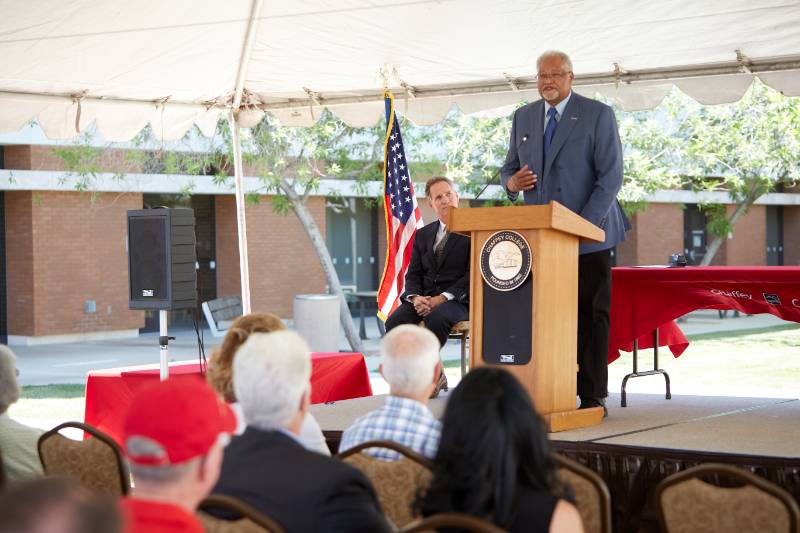 college’s master plan, which includes further expansion with the Ontario campus and
the new Fontana campus.
college’s master plan, which includes further expansion with the Ontario campus and
the new Fontana campus.
He hopes he has added value to the college, and if he could say one thing to the thousands of students whose lives he has impacted, he’d tell them ‘Don’t give up.’
“When I look back at my time at Chaffey, I will always remember the smiling students at Commencement walking across the stage and their families cheering them on,” he said. “Those are some of the best moments I’ve had, because I knew they’re changing their lives.”