
Chaffey College Credit for Prior Learning Helps Veteran Officer Fulfill College Dream
August 31, 2026
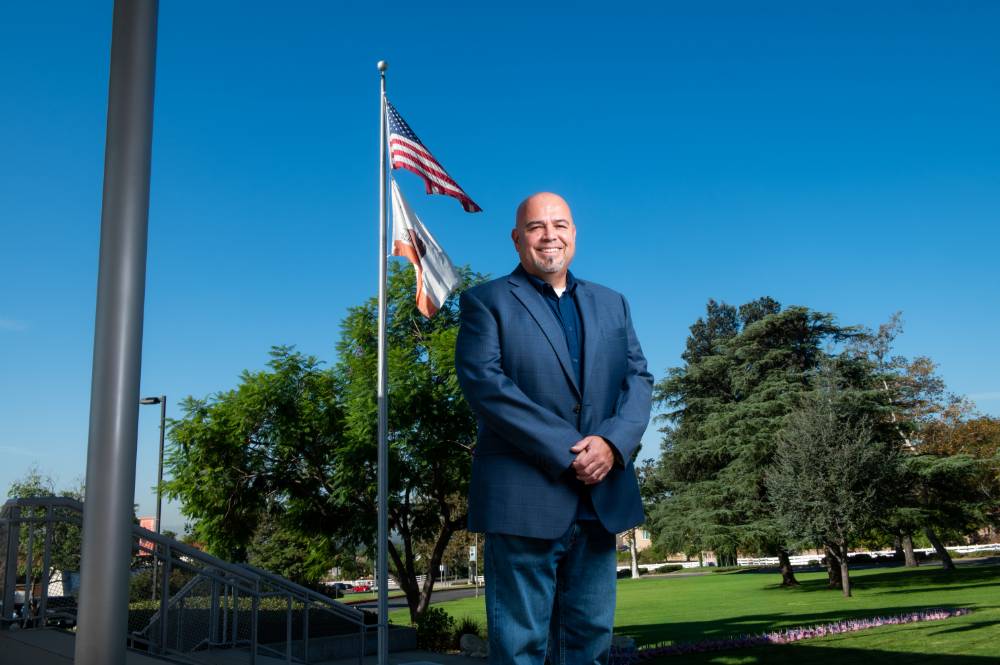
Alfredo Zendejas experienced the excitement and action of being a corrections and parole officer during a 30-year law enforcement career. There was one thing he didn’t get to do during those years that haunted him.
He never earned a college degree despite getting close.
But when he returned to Chaffey College to continue his journey in 2025, he found himself sitting in an introduction to criminal justice class where he already knew all the answers.
“The professor said, ‘What are you doing here?’”
Zendejas received credit for several criminal justice classes by presenting his Commission on Correctional Peace Officer Standards and Training certification. He didn’t have to take any exams, pay for any books or attend any additional classes.
“By not taking those other courses, it freed up time for me to focus on other subjects,” he said.
He’s now on track to earn an associate’s degree in administration of justice, a bucket list item he has been seeking for years.
Nearly seven million working Californians do not have college degrees or certificates, yet their jobs have given them the knowledge and skills that are taught in college courses. State Legislature passed a law in 2018 requiring colleges to award credit for prior military education, training and service. But it wasn’t until 2024 that the state began dedicating funding toward the initiative, which now accommodates professionals from a wide array of backgrounds who are looking for career advancement or simply to become a college graduate.
Chaffey College started to expand its Credit for Prior Learning program in February in alignment with the California Community Colleges Vision for 2030. Since then, the college has increased from 85 to 800 pathways in which students can obtain credit for prior learning with various methods including industry credentials and certifications, portfolios, examinations, military and government training, among others. The evidence submitted by students is then evaluated by faculty.
“Our focus has been to expand opportunities for students,” Awad said. “We recognize that meaningful learning takes place inside and outside of the classroom, so it’s important for us to determine what learning students can validate for college credit.”
The expansion of the program comes at a critical time.
Gov. Gavin Newsom’s 2026 budget includes $35 million to help California community colleges implement, expand and strengthen Credit for Prior Learning opportunities for students and communities across the state. And there is new legislation going into effect in 2031 requiring many newly hired peace officers and officers with less than eight years’ experience to have approved credentials such as associate’s or bachelor’s degrees. With credit for prior learning, officers with experience can potentially save time and money by not having to take criminal justice classes.
Zendejas, an Ontario native, took classes at Chaffey after high school, but struggled and did not finish them. He started a family, joined the Marine Corps Reserves and started his career as a corrections officer at Ironwood State Prison in Blythe. After working for years with the California Department of Corrections, he returned to Chaffey to earn college credit to become a parole officer. He fulfilled the requirements for the new job, but he still needed a few more courses to earn a degree.
“I had to leave Chaffey, but I figured I would come back,” he said.
He served on fugitive apprehension teams throughout Southern California, retiring as unit supervisor in Compton.
Zendejas returned to Chaffey in 2025, enrolling in public speaking and history. He then signed up for a criminal justice course in spring 2026.
Professor of Administration of Justice Ana Rosales recommended that Zendejas receive credit for prior learning, given his extensive knowledge of the subject.
He’s hoping to graduate in spring 2027.
And Zendejas looks forward to the day he can place his associate’s degree next to his wife’s college degree.
“I’m showing my children that it doesn’t matter how old you are – you can go back and get your degree,” he said.
