
Chaffey Alumnus Pursues Doctorate to Help Prevent Veteran Suicide
November 9, 2026
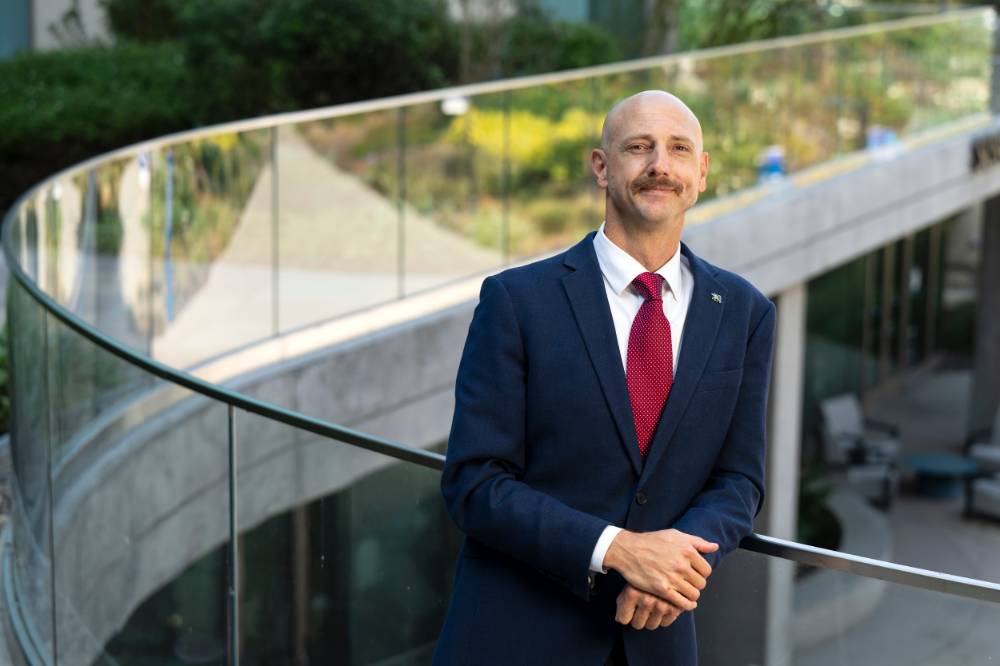
Photo Credit: Steve Zylius/UC Irvine
When Harwood Garland joined the Navy in 2006, he envisioned working as a medic aboard a ship and treating fellow service members.
Instead, he found himself in body armor patrolling the Iraqi desert with a medical bag and rifle in hand in the height of the Iraq War.
A moment in those difficult times gave him hope. His sister sent him a handmade card with a picture of a sailboat and a simple message:
“Sometimes you have to cross the desert to get to the ocean.”
Today Garland – a Chaffey College alumnus - wants to fulfill his dream of helping others, but not as a medical doctor. He’s conducting doctoral research to address veteran suicide.
Garland grew up in Rancho Cucamonga and graduated from Etiwanda High School in 2004. He took first aid and Emergency Medical Technician courses at Chaffey but didn’t complete a degree then. He signed up for the Navy at 20.
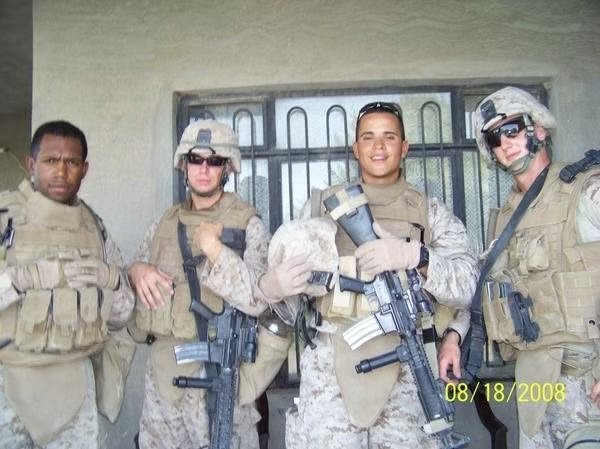
He went to corpsman school in Spain, where he began training to become a medic. Six months later, the Navy sent him to infantry and warfare training before assigning him to a 200-man outpost in Iraq.
After returning from Iraq, Harwood transferred to the USS Kearsarge, home to 3,000 sailors and Marines – and began living the life he had wanted years before.
“Not only was I cut out for clinical work, but I liked it,” he said.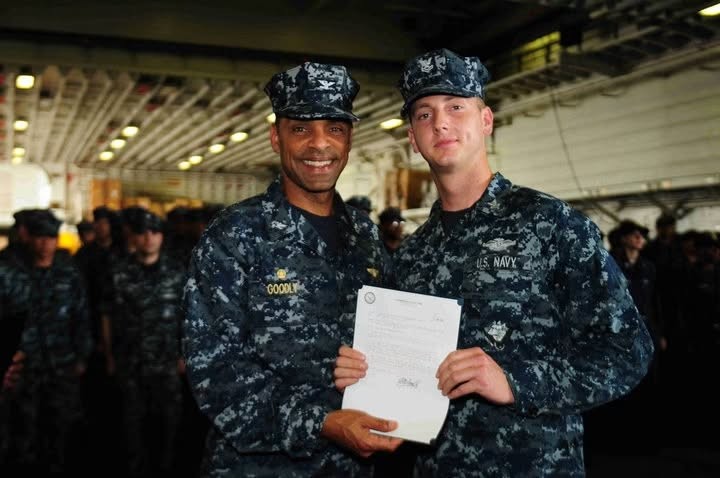
The ship’s medical officer mentored him on paths he could take to become a doctor.
Garland returned to Chaffey College, majoring in math and science to build a foundation for medical school. Chaffey faculty, including Professor of Biology Angela Burk-Herrick and retired professors James des Lauriers and Robin Ikeda, mentored him.
Burk-Herrick described Garland as a quick, enthusiastic learner in her medical school recommendation letter.
“Harwood distinguished himself by his ability to grasp complex concepts easily and often asked questions that demonstrated a higher level of understanding than his classmates,” she wrote.
Garland transferred to the University of California Irvine, where he earned a bachelor’s degree in anthropology. He helped found the university’s Veterans Studies Certificate Program and First-Generation, First-Quarter Challenge program.
He earned master’s degrees in medical anthropology and clinical research, but was not accepted to medical school. Garland didn’t let that stop him, so he applied and was accepted into the doctoral epidemiology program in 2019. With his clinical research and anthropology background, Garland planned to approach military veteran suicide as a cultural disease.
Just as he began this journey, Garland’s brother David – who was not a military veteran – died by suicide.
“He called me before he did it to say goodbye. I held it together for a little while but eventually collapsed. I felt I couldn’t help anybody. I couldn’t touch suicide research and, despite strong faculty support, I dropped out of the program,” Garland said.
Garland and his other brother, Chris – a decorated combat medic – leaned on each other to work through the trauma. Eventually Garland returned to UCI – this time pursing a doctorate in disease prevention focused on military veteran suicide prevention. He also teaches Veterans Studies for the UCI School of Social Sciences Veterans Studies Program.
He hopes to develop more robust veteran networks, strengthening the social fabric of military veterans in retirement. And he’d also like to see a policy added to the Selective Service database that would allow soldiers to enlist and be drafted with friends. Garland is examining ways to promote voluntary firearm-safety measures during the first year after discharge, when veterans are at greatest risk for suicide.
Garland has received multiple honors for his work, including the Order of Merit from the UCI School of Social Sciences and Veteran Student of the Year by the House of Representatives, both in 2016; Veteran of the Year by the California Assembly in 2025; and mentorship awards from the Public Health Alumni Association in 2025 and 2026.
He credited Chaffey’s Veterans Resource Center and UCI’s center with helping him and other veterans succeed.
“It is a balm for us,” said Garland. “I can’t emphasize enough how much I appreciate the support I had along the way.”
